In more than 20 years of coaching professionals from C-suite executives to entry-level employees, one theme emerges with striking consistency. When the moment of career disruption arrived, almost no one saw it coming.
They had excellent performance reviews, a recent promotion, a stable paycheck, and a deep commitment to their work. Then, without warning, a pink slip. Blindsided.
"I gave 25 years of my life to one company, and I was good at my job. But when the layoff came, I realized I didn't have a professional network, no LinkedIn presence, and my resume was out of date. I had no plan."
— John (not his real name)John's story isn't unusual. A product got canceled. His role disappeared overnight, not because of anything he did wrong, but because the market shifted. He hadn't been managing his career. He'd simply been doing his job.
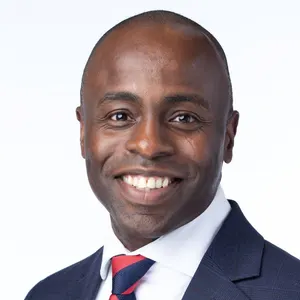
I created Career Funeral so you don't have to go through what John went through. My goal is to be your partner in success as you navigate your career in this era of disruption. Not a resource you turn to after the crisis, but a practice you build before one ever arrives.
Career Funeral exists because no one should face a career crisis without a plan. You deserve a partner, not just a safety net.
Why I built this
I grew up in Nigeria, and at that time, my career was not about passion. It was about survival. You pursued what would guarantee a job after college. So I did what made sense at the time. I earned my bachelor's degree in Nigeria, my master's in the UK, and my PhD in the United States, all in Chemistry.
I landed a role at a Fortune 500 company. By every measure, I had made it. But I wasn't fulfilled. The chemistry I was truly interested in had nothing to do with molecules. It was the chemistry of people, the dynamics of teams, the science of developing leaders and helping them grow their organizations.
It was a difficult decision. But the pursuit of my calling was not negotiable. I decided that the cycle would end with me. The cycle of sacrificing your dreams and telling your children it was worth it. Of passing that pattern down until it becomes a tradition, a chain of people who never expressed their highest potential because someone before them didn't either.
That decision is what led me to pivot from process engineering to organizational and leadership transformation. And over two decades of coaching, I have seen the same preventable pain repeat itself in client after client. Career Funeral is my answer to that.
The name is intentional
Career Funeral. I know the name sounds jarring. The name is designed to evoke something, because most people won't engage with this conversation unless they feel it. And if the word funeral sits heavy with you, I understand. Grief has a way of showing up in our work lives too, and sometimes naming it is the first step toward moving forward.
But behind the name is a simple and practical idea. Think about how we approach other kinds of risk in our lives. When you buy a car, you can't drive off the dealership lot without insurance. Not because you expect to crash, but because if the unexpected happens, you want to be prepared. We insure our homes, our health, and our cars. We protect the things we value against outcomes we hope will never happen.
People invest in home insurance, car insurance, and health insurance, but rarely think to insure their careers. Yet for most people, their career is their single largest financial asset.
Career Funeral is that insurance policy. It's not about expecting catastrophe. It's about being ready for it, so that if it comes, you move forward with clarity instead of panic.
Four questions that change everything
At its core, the Career Funeral concept asks you to sit with some fundamental questions, not once, but regularly, as a practice. The first set surfaces awareness. The second surfaces what you need to do about it.
The Career Funeral concept goes deeper than a name. When you ask yourself, "What if I lost my job today?" the answers reveal vulnerabilities you didn't know you had. And those vulnerabilities become your action plan.
These aren't hypothetical exercises. They are readiness checks. In today's AI-driven economy, they matter more than ever.
The era of the profitable layoff
We have entered a new kind of economic reality. Companies posting record profits are simultaneously cutting tens of thousands of jobs. Not because employees performed poorly, but because technology is reshaping entire categories of work faster than any job description can keep up.
Consider what happened in 2026 alone. Amazon reported $77.67 billion in annual net income, then cut over 16,000 jobs. Oracle posted $2.9 billion in Q1 profit while eliminating 30,000 positions. Meta generated nearly $60 billion in Q4 2025 revenue and still cut 8,000 roles. Dell grew net income by 29% and laid off 11,000 people.
|
Oracle
30,000
jobs cut
$2.9B Q1 profit
|
Amazon
16,000+
jobs cut
$77.67B net income
|
Dell
11,000
jobs cut
29% profit growth
|
Meta
8,000+
jobs cut
~$60B Q4 revenue
|
These were not struggling companies. These were profitable ones restructuring for an AI-driven future, and their employees paid the price. Disruption is no longer a signal that something went wrong. It is a feature of the modern economy.
Career Funeral exercises are your readiness practice, a structured way to ensure that whatever happens in the market, you know your value, have a plan, and are never caught off guard.
Your career is too important to leave uninsured. And you don't have to navigate it alone.